
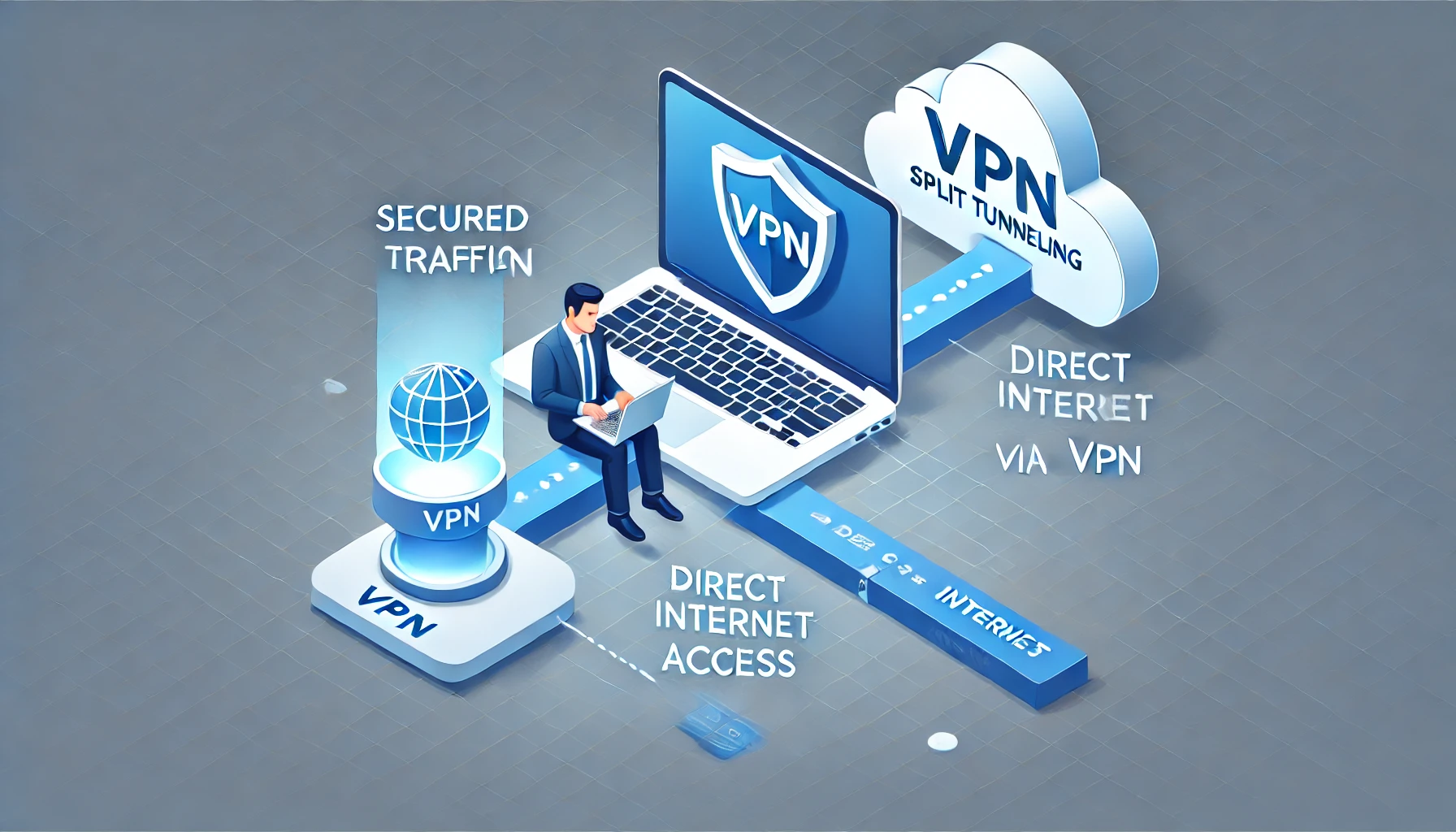
Virtual Private Networks (VPNs) have become an essential tool for individuals and organizations seeking to protect their online privacy and security. By creating a secure, encrypted tunnel between a user’s device and a VPN server, VPNs can mask IP addresses, encrypt internet traffic, and safeguard against cyber threats. However, a feature known as split tunneling has raised concerns among security experts and users alike. In this blog, we will delve into the inner workings of VPNs, explain the concept of tunneling and split tunneling, and assess the potential security and anonymity implications of split tunneling on VPNs.
How VPNs Work
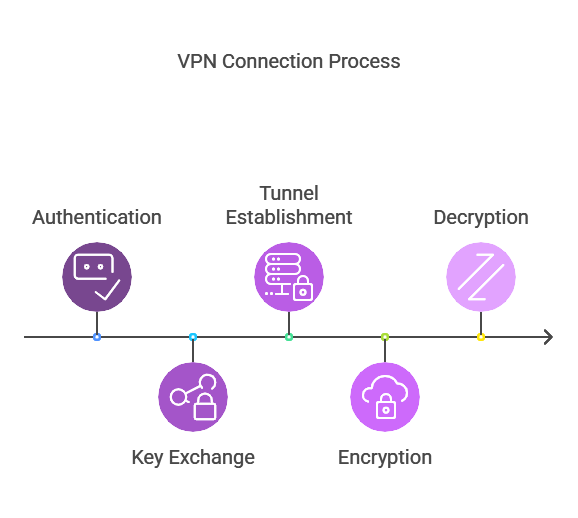
[Split Tunneling VPN – How VPN Works]
- Authentication: The client initiates a connection to the VPN server, and the user is authenticated using credentials, such as a username and password.
- Key Exchange: The client and server negotiate a shared secret key, which is used to encrypt and decrypt internet traffic.
- Tunnel Establishment: The client and server establish a secure tunnel, using the negotiated key, to encapsulate internet traffic.
- Encryption: Internet traffic is encrypted at the client-side, using the shared secret key, and transmitted through the secure tunnel to the VPN server.
- Decryption: The VPN server decrypts the received traffic, using the shared secret key, and forwards it to its final destination on the internet.
Tunneling and Split Tunneling in VPNs
Tunneling, in the context of VPNs, refers to the process of encapsulating internet traffic within a secure protocol, as described above. Split tunneling, on the other hand, is a feature that allows VPN users to selectively route internet traffic through the VPN tunnel, while also accessing local network resources or the internet directly.
In a split tunneling configuration, the VPN client is configured to:
- Route specific traffic: Through the VPN tunnel, encrypting and protecting sensitive data, such as online banking or work-related activities.
- Bypass the VPN tunnel: For non-sensitive traffic, such as streaming or online gaming, allowing for faster speeds and reduced latency.
Split tunneling can be implemented in various ways, including:
- Policy-based split tunneling: The VPN client is configured to route traffic based on specific policies, such as destination IP addresses, ports, or protocols.
- Application-based split tunneling: The VPN client is configured to route traffic based on specific applications, such as web browsers or email clients.
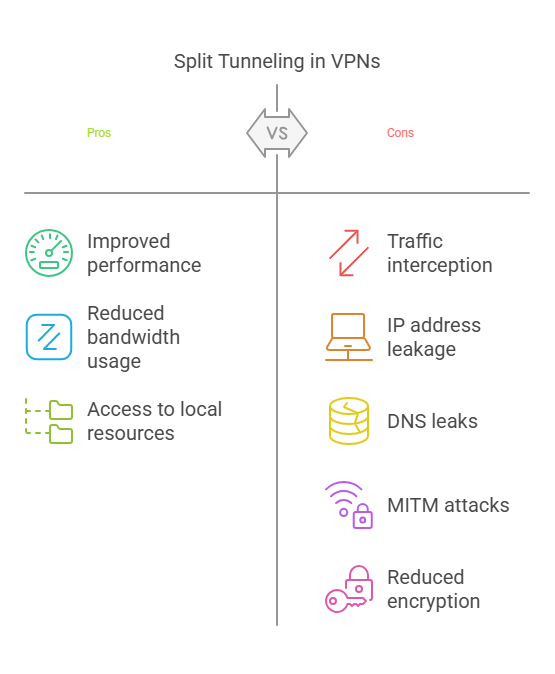
Split tunneling can potentially compromise the security and anonymity provided by a VPN, as it introduces several risks and vulnerabilities:
- Traffic interception: By allowing non-sensitive traffic to bypass the VPN tunnel, an attacker may be able to intercept and inspect this traffic, potentially revealing sensitive information, such as IP addresses, browsing history, or login credentials.
- IP address leakage: If the VPN client is not properly configured, the user’s original IP address may be leaked, compromising anonymity and potentially revealing their location.
- DNS leaks: Split tunneling can also lead to DNS leaks, where DNS queries are sent outside the VPN tunnel, potentially revealing the user’s browsing activities and location.
- Man-in-the-middle (MITM) attacks: An attacker may be able to intercept and manipulate traffic that is not routed through the VPN tunnel, potentially leading to MITM attacks, such as session hijacking or malware injection.
- Reduced encryption: By allowing non-sensitive traffic to bypass the VPN tunnel, the overall encryption coverage is reduced, potentially leaving sensitive data vulnerable to interception and eavesdropping.
Mitigating the Risks of Split Tunneling
To minimize the security and anonymity risks associated with split tunneling, VPN users and administrators can implement the following measures:
- Configure split tunneling policies carefully: Ensure that split tunneling policies are configured to route sensitive traffic through the VPN tunnel, while allowing non-sensitive traffic to bypass the tunnel.
- Use a VPN client with robust split tunneling features: Choose a VPN client that offers advanced split tunneling features, such as policy-based routing and application-based routing.
- Implement DNS leak protection: Ensure that DNS queries are sent through the VPN tunnel, using features such as DNS leak protection or VPN-based DNS servers.
- Monitor and log VPN activity: Regularly monitor and log VPN activity to detect potential security threats and anomalies.
- Use a VPN with a strong security protocol: Choose a VPN that uses a strong security protocol, such as OpenVPN or WireGuard, to protect against traffic interception and eavesdropping.
Conclusion
Split tunneling can be a useful feature for VPN users, allowing for improved performance and flexibility. However, it also introduces security and anonymity risks, if not properly configured and managed. By understanding the technical implications of split tunneling and implementing measures to mitigate these risks, VPN users and administrators can ensure a secure and anonymous online experience. As the use of VPNs continues to grow, it is essential to carefully evaluate the trade-offs between security, anonymity, and performance, and to choose a VPN solution that meets the specific needs of each user or organization.